
Ophthalmology Trials: Managing Protocol Deviations in Visual Function Assessments
Protocol deviations for Visual Function Assessments (VFAs) in ophthalmology trials can affect the accuracy and reliability of outcomes. A VFA measures an individual’s functional or practical visual capabilities. This is in contrast to a standard eye exam, which includes a series of tests to measure real-world visual skills. VFAs perform both quantitative and qualitative assessments in individuals, especially their neurological and developmental conditions, which standard eye tests cannot measure.
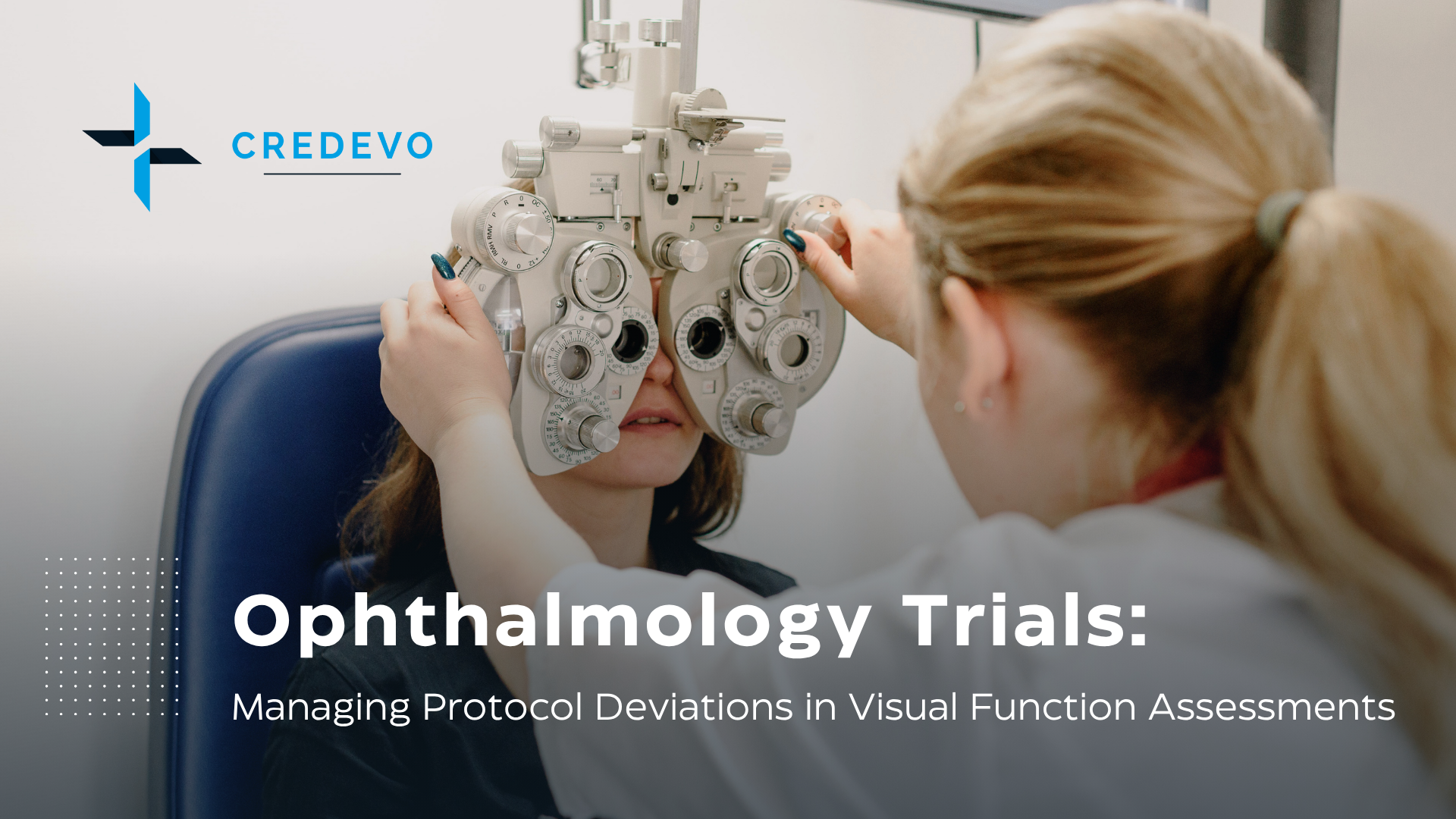
Protocol deviations may occur due to reasons such as equipment differences, technician errors, or missed patient coordination. These deviations can affect the accuracy or consistency of the results generated in a clinical trial. Therefore, to maintain data quality, reducing and managing protocol deviations is crucial, which ensures clinical findings are valid and acceptable to regulators.
This article provides an overview of VFAs, the reasons why protocol deviations occur in ophthalmology trials, and discusses operational best practices that can help reduce them.
Understanding Visual Function Assessment (VFA): Purpose and importance
VFA helps improve an individual’s visual function by identifying appropriate accommodations, modifications, and strategies. Since visual conditions and abilities can change over time due to age, therapy, or neurological factors, professionals repeat VFAs periodically to stay updated on the individual’s current visual and developmental needs.
A VFA assists in understanding important issues of the eye, such as eye teaming, tracking, or visual processing deficits. Understanding these aspects helps in identifying visual difficulties affecting reading, learning, movement coordination, and participation in everyday activities.
Professionals often perform VFAs for individuals with eye disorders such as Age-related Macular Degeneration (AMD), Cataract, Glaucoma, Diabetic Retinopathy, Retinal Dystrophies, Cerebral Visual Impairment (CVI), and other developmental or neurological disorders. The assessment helps healthcare providers or researchers to track changes in visual ability and determine whether a treatment or therapy is effective.
Ophthalmology clinical trials and key assessments
Ophthalmology clinical trials evaluate the safety and effectiveness of treatments for various eye diseases. These diseases include hereditary retinal abnormalities, diabetic retinopathy, and age-related macular degeneration. Researchers evaluate these studies using objective and patient-centered assessments and focus on specific endpoints essential to ophthalmology trials.
Standard evaluations in VFAs include:
- Acuity (VA): To assess visual clarity.
- Contrast sensitivity: This refers to the capacity to detect minute variations in texture and colour.
- Measures of patient-reported outcomes (PROMs): Record individual assessments of symptom load, quality of life, and functional eyesight.
- Electrophysiological tests: Objectively evaluate the function of the retina and optic nerves (e.g., electroretinography).
Altogether, these tests give a comprehensive view of treatment effects. To maintain the credibility of these assessments, strict adherence to the study protocol is required. Any protocol deviation could affect the validity of trial data, patient safety, and regulatory review. Hence, interpretable and scientifically sound evidence are mandatory for regulatory acceptance. Let’s take a look at some of the primary causes of VFA protocol deviations.
Key sources of protocol deviations in Visual Function Assessment (VFA)
There are several issues that may affect endpoint reliability and ophthalmology trial validity. Patient, operator, equipment, scheduling, and data-related issues can cause protocol deviations in VFAs.
- Patient-related factors: Patient-related factors are one of the main causes of protocol deviations in VFAs. Deviations happen when patients do not cooperate, misunderstand instructions, or lose focus during tests. Such issues create measurement noise and prevent the detection of true changes in vision.
- Operator-related deviations: Different examiners may explain tests differently, affecting patient performance. Also, if an examiner hasn’t been properly trained on how to perform a test, their measurements might be inaccurate. Hence, differences in how people run the tests can make the study results inconsistent, even if the patient’s vision hasn’t changed.
- Equipment and environmental factors: Factors such as poor device calibration, fluctuating lighting conditions, inconsistent screen settings, or the use of different instruments across centers can further reduce data comparability. For example, if staff fail to properly calibrate machines like visual field analyzers or Optical Coherence Tomography (OCT) scanners, the devices may produce inaccurate readings. Using different OCT or visual field models across sites also makes it difficult to compare results.
- Timing and scheduling deviations: In ophthalmology trials, each patient assessment, like eye exams or imaging, needs to happen at specific scheduled times. If a visit is delayed or missed, it can break the rules set in the study protocol. This can make the trial data less reliable because the results may no longer accurately show how the treatment is affecting patients over time.
- Data recording and reporting issues: For example, manual entry errors, inconsistent grading, or incomplete datasets can bias analyses and compromise regulatory acceptability if not properly monitored or corrected.
Protocol deviations in ophthalmology trials can increase variability and reduce the ability to detect true treatment effects. This could lead to an incorrect interpretation of the safety or effectiveness of a treatment, raising regulatory issues that may further delay or prevent approval of the trial.
Appropriate mitigation measures to avoid such deviations are necessary for data integrity and compliance in ophthalmic clinical studies. To ensure consistent and high-quality data across sites, clinical teams must adopt structured methods that help identify, manage, and prevent these deviations at every stage of the trial.
Best operational practices to reduce protocol deviations in Visual Function Assessment (VFA)
To ensure trial data reliability, investigators must know how to detect, monitor, and manage protocol deviations in VFA. Following effective operational practices can significantly reduce these deviations. Key practices include designing and standardizing protocols, training staff, controlling equipment, and ensuring patient cooperation. Here’s what investigators need to know about identifying, tracking, and handling protocol deviations in VFAs to maintain reliable trial data.
- Arranging investigator meetings to discuss protocol plans: Before the trial starts, a small group of investigators and coordinators may meet to share knowledge, address potential barriers, and agree on standard operating protocols. To avoid deviations, teams should consult site investigators and staff to ensure the VFA protocol is operationally practical. Including sites with varying experience levels and reviewing lessons from previous trials helps anticipate operational and patient-related issues.
- Use of standardized protocols and SOPs: In an ophthalmology trial, investigators must conduct each eye test in the same way across all study centers. This includes visual field tests, OCT exams, and visual acuity assessments. They must develop a robust and clear protocol. The protocol should be patient-centric. It must define patient positioning, device settings, and procedures for handling common testing issues.
- Training and certification of site staff: Having capable and certified staff at each site ensures that the study can proceed as designed and helps minimize major delays. Study teams must also provide adequate training and certification for technicians and readers. That way, everyone follows the same set of instructions on how to perform the test, instruct patients, and read results. An electronic Learning Management System (eLMS) could be employed to deliver uniform training on VFA procedures, especially across multiple sites.
- Use of calibrated, standardized equipment: Validating and standardizing the infrastructure ensures that sites can provide high-quality data. Study teams must calibrate and standardize ophthalmic equipment, especially OCT scanners, visual field analyzers, and vision charts, across all study sites. This approach prevents equipment-related measurement differences and ensures that results from different sites remain comparable.
- Real-time review & quality control: Keeping Principal Investigators (PIs) involved in regular review can help identify mistakes early. For instance, when visual field results or OCT images are being acquired, supervisors can monitor the process and correct any problems in real-time. This proactive method protects data integrity, thereby preventing deviations that could affect trial timelines or require protocol changes.
- Patient education and engagement strategies: Patient participation can be considered an important factor. Educating patients during the enrollment process on the importance of adhering to the study visit schedule ensures protocol compliance. Teaching patients to focus well during tests, follow directions, and stay attentive leads to better results. Moreover, educated and informed patients help in reducing quality measurement errors, which increases study reliability.
Conclusion
Protocol violations in ophthalmology, particularly with VFAs, can lower data quality, hide treatment effects, and complicate regulatory submissions. These issues can be addressed through operational practices: standardized protocols, experienced staff, calibrated equipment, real-time checklists, and cooperative patients. Applying these practices from the start helps minimize the risk of protocol deviations, improves consistency and reliability of data, and supports regulatory compliance. Together, these measures strengthen overall trial integrity and contribute to smoother, more accurate execution of ophthalmic studies.
Are you planning to conduct an ophthalmology clinical trial and want to avoid execution challenges and protocol deviations?
It’s crucial to have strategies in place to ensure smooth study conduct and compliance. Share your requirements below to connect with us and discover how we can help minimize those challenges in your ophthalmology clinical trials.